

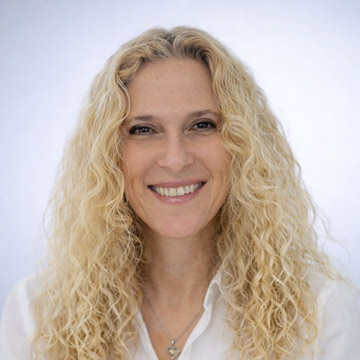
אודות
After my Bachelor degree in Occupational Therapy, from the University of Haifa, I graduated my M.Sc. and Ph.D at the Faculty of Medicine, Technion, Israel. My studies focused on neurophysiology of sensory systems and specifially on the impacts of Serous Otitis Media on children's vestibular system; and on Hearing impairments and deafness due to consanguinity – genetic factors and their physiological and clinical expressions,
I am the head of "Sensing Life": The Laboratory for Sensory Processing and Daily Function, at the Occupational Therapy Department, Faculty of Social Welfare and Health Sciences, University of Haifa, Israel
My studies focus on neuro-modulation difficulties expressed in sensory/emotional and behavioral modulation in clinical populations. I examine their neurophysiological , clinical and functoinal implications on daily life.
Additional possitions:
2017-2020 – A Management Committee Substitute and a member of the European Cooperation in Science & Technology (COST) Action CA16118
2018-present – visiting professor at the Charité – Universitätsmedizin Berlin, Germany, Department of Dermatology and Allergy –
2019-present – Member of the Urticaria Center of Reference and Excellence (UCARE)
2020-present – Member of the European College of Neuropsychopharmacology (ECNP)
תחומי מחקר
פרסים
מידע נוסף
| Title of Thesis | Name of Student | |
| Working memory differences between children five years after cochlear implantation and children with normal hearing | Doris Durr | 1 |
| Sensory profile of children with Atopic Dermatitis | Sausan Mazzawi | 2 |
| Self-efficacy among children with handwriting difficulties | Nagauker Limor | 3 |
| Developmental Coordination Disorders in children with hearing disabilities | Dafna Weissman | 4 |
| Sensory profile and eating patterns of children with mental retardation | Reem Hardal | 5 |
| Impacts of Ritalin on Executive functions and participation level of children with ADHD | Maayan Shimoni | 6 |
| Comparing self- efficacy and preferred daily activities between children with Developmental Coordination Disorder (DCD) and typical peers | Amani Kassis | 7 |
| Cultural impacts on child's memory abilities, according to the Contextual Memory Test for Children (CMT-CH) | Netta Toledano | 8 |
| Comparing sensory performance and participation between children with ADHD and typical children | Danieala Ziv-on | 9 |
| Sensory processing and writing performance in the elderly | Sari Hus | 10 |
| Participation in daily activities among children with sensory processing disorders | Naama Katz | 11 |
| Sensory processing and participation in daily activities among children with autism | Michal Hochhauser | 12 |
| The relationship between sensory processing abilities and personality characteristics | Nili Ben-Avi | 13 |
| Sensory processing and intimate relationship in Post-Traumatic Stress Syndrom (PTSD) | Dafna Palgy- Levin | 14 |
| Sensory processing and participation of Muslim children | Inas Halilia Samich | 15 |
| Sensory processing, participation and accessibility among youth with sensory loss | Shaima Hamed | 16 |
| Contextual visual memory of children with Traumatic Brain Injury | Shoshi Cohen-Tau | 17 |
| Sensory processing, participation and environmental accessibility among children with ADHD | Merav Zaidner | 18 |
| Writing performance of children with ADHD, children with ADHD and sensory processing disorders and typical developing controls | Hagar Offek | 19 |
| Environmental accessibility and participation of youth with mental retardation | Rawan Samara | 20 |
| Sensory processing and mothers' anxiety of children born preterm | Noga Netz | 21 |
| Participation, environmental accessibility and quality of life of children with CP | Samar Huri | 22 |
| Motor skills and self-efficacy among children with DCD while using virtual games | Rotem Sido | 23 |
| Sensory profile, daily routine and parental sense of competence among children with High Functioning Autism Disorder (HFAD) | Racheli Sorek | 24 |
| Sensory processing, participation and quality of life among people with diabetes | Sanaa Darausha – Najjar | 25 |
| Sensory processing, anxiety and self efficacy among children with DCD | Dalit Segal | 26 |
| Sensory reactivity and its relation to child's anxiety, quality of life and parental stress and competence | Liat Friedland | 27 |
| The impacts of meaningful occupation on PTS – neurobiological and behavioral manifestations | Orly Deri | 28 |
| Participation and Quality of life of people with PTSD | Ariela Rosenblum | 29 |
| Sensory processing, anxiety and quality of life among adolescents | Mary Mabgish | 30 |
| Effects of Background Sensory Stimulation and Sleep Quality on the Acquisition and Memory Consolidation of a Novel Motor Skill | Agabria Nibal | 31 |
| Sensory modulation, executive functions and quality of life among children with ADHD | Bat-El Cohen | 32 |
| Comparing Sensory processing, participation and quality of life between older people with high and low falling risk | Keren Ravitz | 33 |
| Sensory processing abilities, executive functions and quality of life of children with psychiatric disorders | Genan Hamud | 34 |
| Executive functions, activity performance in virtual reality and quality of life in children with hearing impairments | Lama Sharbari | 35 |
| Sensory processing patterns of patients with CVA | Avivit Fux | 36 |
| Sensory processing – from neurophysiology to participation in daily life | Amir Fund | 37 |
|
Sensory processing and executive functions disorders in PTSD as expresses in daily life |
Nihal Safi | 38 |
|
Sensory modulation and daily life of children with food allergy |
Shirel Yechiel | 39 |
|
Fine motor and participation in children with SOM |
Madiha Hijazi | 40 |
|
Sensory modulation and participation in children with ASD or anxiety disorder |
Reut Adler | 41 |
|
Neuro modulation in children with neurological disorders under COVID-19 |
Hila Samet | 42 |
|
|
||
| PhD students: | ||
| Behavioral and Neurophysiological characteristics of individuals with sensory processing disorders | Sharon Zlotnik | 1 |
| Differential profiles of performance, participation and quality of life of children with ADHD and/or Sensory Processing Disorders (SPD) | Maayan Shimoni | 2 |
| Sensory modulation, somatosensory discrimination and sensory based motor performance of children with HFASD and implications for activities of daily living | Netta Katz | 3 |
| Predicting participation and quality of life of children with hearing impairment by body functions, activity performance, environmental accessibility and parental stress | Shaima Hamed Daher | *4 |
| Sensory and Attentional Neuro-dysregulation in Post-Traumatic Stress Disorder, Re-Experiencing Symptoms and Impacts on Daily Function | Janne Lissa Hoogervorst | *5 |
| Sensory Regulation, Executive Functions, Self-Perception, Participation and Quality of Life in Children and Adolescents with Anxiety Disorders – from Electrophysiological Measures to Daily functioning | Genan Hamud | *6 |
| Visual processing/Cortical Visual Impairment, altered sensory modulation and their relation to participation and environmental accessibility in children with Cerebral Palsy | Nava Gelkopf (with Yoram Bonneh) | *7 |
| Medical Doctor thesis | ||
| The sensory profile of children with Asthma | Meital Almog | 1 |
| The role of physical status versus mental status in predicting the quality of life of patients with lumbar disk herniation | Elad Sarfaty | *2 |
| Sensory processing and executive functions among IVF children | Li Spritz | *3 |
| Sensory profile, executive function, self perception, participation and quality of life among children with psychiatric disorders | Inbar Barzuza | *4 |
| Post Doctorates: | ||
| Sensory processing and executive functions as predictors of falls in elderly adults | Yael Zilbershlag | *1 |